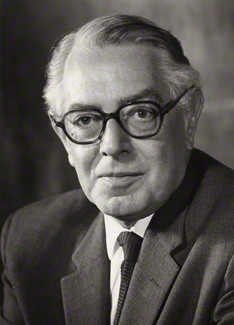
The tradition of independent review of terrorism legislation stretches back to the 1970s. Between 1978 and 1984, reviews of the Prevention of Terrorism (Temporary Provisions) Acts and the Northern Ireland (Emergency Provisions) Acts were carried out by Lord Shackleton, Earl Jellicoe and Sir George Baker.
The Jellicoe Report of 1983 remarked that the annual renewal debates ‘have not, on the whole, received the Parliamentary time that they merit’. In order to ensure that those debates were better informed, an annual review was instituted. As explained to the House of Lords by Home Office Minister Lord Elton on 8 March 1984, the Independent Reviewer’s function would be to look at the use made of the statutory powers relating to terrorism, and to consider, for example, whether any change in the pattern of their use needed to be drawn to the attention of Parliament.
The Independent Reviewer was to have access to all relevant papers, including sensitive security information and ministerial correspondence. He or she would not be a judge, but ‘a person whose reputation would lend authority to his conclusions, because some of the information which led him to his conclusions would not be published’. Between 1984 and 2001, annual reports were produced by Sir Cyril Phillips, Viscount Colville and JJ Rowe QC.
In 1995 the government asked the Rt Hon. the Lord Lloyd of Berwick PC, a serving law lord, to consider the future need for specific counter-terrorism legislation in the United Kingdom, and to make recommendations. The inquiry report, Inquiry into Legislation against Terrorism, published in October 1996, concluded that ‘there will continue to be a need for permanent anti-terrorist legislation’ even in the event of peace in Northern Ireland, and made a number of recommendations, including on the law regarding intercept as evidence, arrest and detention, stop and search, port powers, terrorist finance, sanctions and sentencing. Many of those recommendations found their way into the Terrorism Act 2000

On 11 September 2001, a few hours before the attacks on the World Trade Centre, Lord Carlile of Berriew CBE QC agreed to accept appointment as the Independent Reviewer of Terrorism Legislation. As terrorist offences and counter-terrorism powers proliferated over the ensuing decade, the profile of the role increased. It was first put on a statutory basis in relation to control orders under the Prevention of Terrorism Act 2005, and is now referred to in a number of different statutes.
Lord Carlile held the position for more than nine years, until he was replaced by David Anderson QC on 21 February 2011.

David Anderson KC was in post for 6 years, until February 2017, during which time he is widely seen as having updated and defined the role of Independent Reviewer. In 2015 David Anderson KC reported on investigatory powers in his seminal report ‘A Question of Trust’ which laid the foundations for the Investigatory Powers Act 2016, and after his term of office expired was commissioned by the Government to carry out a series of influential reviews of reforms to the UK’s counter-terrorism machinery following the 2017 attacks in London and Manchester. In June 2018 he was elevated to the House of Lords as Lord Anderson of Ipswich as a cross-bench peer, from where he continues to speak on counter-terrorism legislation and allied matters.

Max Hill KC, who came to the role with a distinguished background as a criminal prosecutor, was Independent Reviewer between March 2017 and October 2018, when he was appointed as Director of Public Prosecutions.
Max Hill KC carried out two annual reviews, and individual reports on the Westminster Bridge and London Bridge attacks and their aftermath.
Jonathan Hall KC was Independent Reviewer of Terrorism Legislation from May 2019 to November 2026. He produced 8 annual reports and influential standalone reports on prisons, protests, MAPPA, online, and extreme violence, and was additionally appointed the UK’s first Independent Reviewer State Threat Legislation in February 2024. This additional role required him to review the operation of the National Security Act 2023, and in May 2025 he published a report which paved the way to the creation of a new designation tool under the National Security (State Threats) Act 2026. Jonathan Hall KC adopted the practice of publishing technical notes on national security-related Bills as they went through Parliament, which have proven to be very influential and have been frequently cited by MPs and Peers.
Changes introduced by the Counter-Terrorism and Security Act 2015 increased the range of the Independent Reviewer’s work and gave him increased flexibility as to how it is to be performed. David Anderson QC commented on the changes here. A proposed Privacy and Civil Liberties Board (PCLB) came to nothing but the Independent Reviewer was given some extra support.
A more extensive history of the Independent Reviewer’s role (together with some comments on its influence) was published in February 2014 in a working paper which forms the basis of articles now published in [2014] Public Law 403-420 and (with less historical detail) in the New European Journal of Criminal Law.